

Maccabi Netanya U19 - Beitar Jerusalem U19 - live odds and in-play markets
What Maccabi Netanya U19 - Beitar Jerusalem U19 is and where it runs
An opening price rarely survives untouched, tightening or drifting as news and money come in. This page follows Maccabi Netanya U19 - Beitar Jerusalem U19 from the first whistle to the last, and the board refreshes on its own while the ball is in play. The fixture belongs to Israel Championship U19, so the stage of that competition applies to this game too.
One published regulation frames everything, from the entry list to the way ties are separated and the sanctions, and it applies in exactly the same way to the strongest entrant and the weakest. The level of a competition decides how deep the in-play list runs. After an early exit the camp's reaction settles it: a coach let go and a season written off say how much the trophy mattered, where a polite statement says the opposite. A meeting of Maccabi Netanya U19 and Beitar Jerusalem U19 in a lower division opens fewer markets than a top-flight fixture, and the board shows only what is genuinely trading at that minute.
Head-to-head history sits beside the live board for a reason. During a live match, measuring the current tempo against earlier meetings helps time an entry on the coupon. Earlier meetings of Maccabi Netanya U19 and Beitar Jerusalem U19 describe habits rather than outcomes, while the standings and the rest of the calendar stay on Israel Championship U19 for anyone checking what this result changes.
Reading the board while the game runs
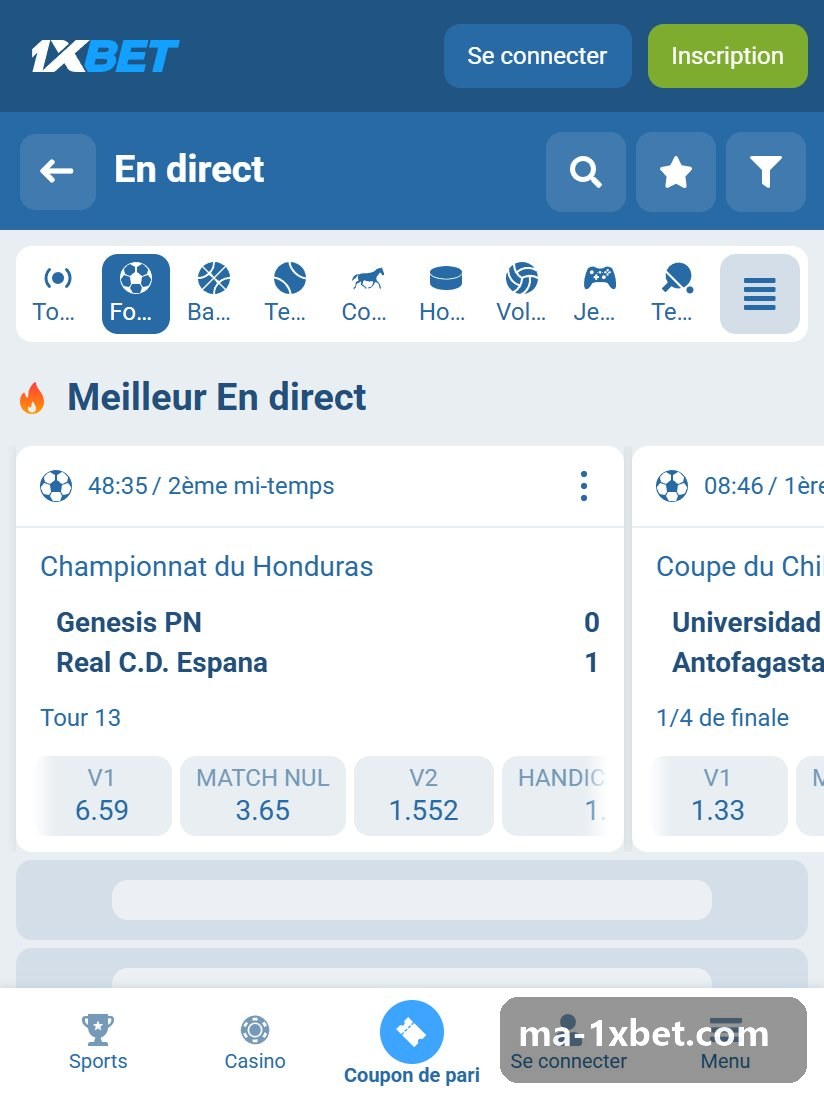

Under the scoreline sit the minute, the pressure counters and the price column. Through a quiet spell a price holds long enough to be read; through a hot sequence the same market changes several times inside a minute. A goal, a dismissal or a penalty award rewrites that column at once, so the number seen a second earlier is not the number the coupon accepts.
The closing stage belongs to whoever kept something in reserve: fresher participants play the final moments against worn bodies, and that difference decides more endings than any statistic. Reading a football match means watching where the ball spends its minutes, not only what the scoreline says. The referee's first calls set the tone for the whole afternoon, since an official who lets play run invites heavier duels, and that tolerance echoes into the fouls and cards markets. Such turns arrive without warning, and the market answers before the crowd does.
Suspension appears while an episode is still unresolved, and the site would rather close for a moment than keep selling a price that reality has already overtaken. At the interval the list shrinks to the markets that survive a break and reopens when play restarts; a long stoppage for treatment or a video review does the same.
Live markets on this fixture
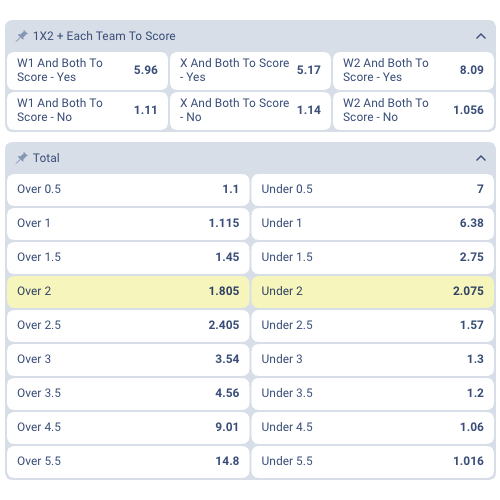
Marquee fixtures open hundreds of lines while smaller games keep to the core selections. The in-play list for football is built in layers: the result, then goals, then the small events that repeat dozens of times in a game. That core carries over into the live section, recalculated continuously under identical labels, its reading moving with each change of situation inside the meeting. Those base lines stay open almost from kick-off to the final whistle.
The best-stocked fixtures are often the most contested, and an abundance of lines does not help you decide; it only multiplies the ways of expressing the same uncertainty. Depth follows coverage, so a widely tracked fixture opens corner and card lines that a quieter one never shows. Whether you lean towards the simple result, the more cautious double chance where a draw exists, or bolder handicaps and totals, it's all on the board. You can also aim for the exact score before grouping your favourites into an accumulator. The table below shows what each family settles on.
Market | What the bet covers | How it behaves in play |
|---|---|---|
1X2 live | A win for Maccabi Netanya U19, a draw, or a win for Beitar Jerusalem U19 from the current score | Reprices after every goal and every red card |
Total goals | Goals from both sides together, over or under the posted line | The line drops as the minutes run out |
Asian handicap | One side starts the coupon with a goal advantage | Moves as soon as the game turns one-sided |
Both teams to score | Whether Maccabi Netanya U19 and Beitar Jerusalem U19 both find the net | Closes once the answer can no longer change |
Next goal | Which side scores next, or nobody does | Settles at the next goal or at the whistle |
Corners and cards | The count of corners or cards in a half or across the game | Runs while play continues, pauses at the break |
Correct score | The exact scoreline at the end of the match | Swings hardest in the seconds after a goal |
Everything publicly known about a fixture already sits in the price, so a position kept because it agrees with the general view repeats the consensus instead of questioning it. A market taken because it matches what is happening on the pitch lasts longer than one taken out of habit, and the lines above are read against the clock.
What moves the price right now
In football the score is never final until the last whistle; one late strike can rewrite the correct-score line and push the total the other way, and following it live is where the real openings appear. Each of those turns reaches the coupon within seconds. The second goal changes what the match is, since a two-goal lead turns the leader into a manager of the game, and comebacks from that far back stay rare. One goal shifts the totals line, the handicap and the result price in the same refresh.
Every card freezes play for a moment, protest, a wall to set, tempers to cool, so matches broken up by sanctions spill into long added time, the familiar window for late goals. A red card leaves a side a player short for the rest of the game, and the market treats the remaining minutes as a different match. Across a full season, the second half produces more goals than the first in most leagues, and the half-by-half lines are priced with that gap in mind. The two halves seldom carry the same rhythm, and the second is where the goal lines usually get decided.
For some sides a long throw works as an extra corner, turning every ball out of play near the box into a direct delivery toward the penalty spot. Corners and free kicks near the area are the shortest route to a goal when a side cannot build through the middle. A goalkeeper change, rare and nearly always forced, unsettles a defence that has spent the match tuned to one voice behind it, and set pieces become its immediate test. Fresh legs after the hour change the pressing distance, and the goal markets answer within a few minutes.
Match statistics: what they show and what they hide
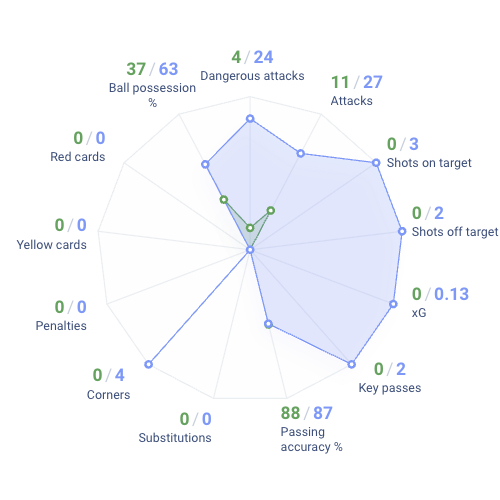
Over a short spell live numbers are mostly noise, and different data feeds do not log the same action at the same moment, so let the match breathe before concluding. Possession, shots, shots on target, corners and dangerous attacks describe pressure, and pressure is what the goal markets price. A form table lines up results produced by different teams: the weekend side, the midweek side, the one that played with reserves. The points add up, the contexts do not. A side can hold the ball for an hour without troubling the keeper, and the counter still reads in its favour.
At corners everything rests on trust that cannot be improvised: defenders need to know which ball their goalkeeper will come for and which one he leaves to them, and that understanding takes weeks to settle. One goalkeeper in form wipes out the gap the shot count promised. Form has a direction of travel. Two competitors can show the same recent record while one is climbing and the other sliding, and the order of those results says more than their sum. Recent form of Maccabi Netanya U19 and Beitar Jerusalem U19 explains the opening prices, then loses weight with every minute the fixture actually plays.
Placing a bet while the game is live
In live play a shifted price must be accepted before the bet stands. The route is identical on a computer and on a phone.
Tapping the star beside a meeting files it under your favourites, and the dedicated tab gathers them together so the next visit lands straight on it. The football list in live football holds the fixture in place from kick-off to the final whistle.
Tap the price of the market you want. System mode carves your selections into combinations that run side by side, so part of them can fail while the slip still brings something back. The coupon stores that figure as it stood at the tap.
Enter the stake in dirhams and check the return the coupon calculates.
On a handicap line the sign matters as much as the number: minus one and a half and plus one and a half describe opposite bets, and the two rows sit one right above the other. A price that moved while you were typing comes back for acceptance instead of being swapped in silently.
Follow the ticket in the list of open bets, where settlement appears once the result is official.
Where the option is offered, a running bet can be closed early for the sum shown at that moment, a judgement about the minutes still to come rather than the final score.
Prematch and live on the same fixture
A pre-match price drifts over days and leaves room to think it over, while in play a single passage of play redraws the whole board within seconds. The prematch line opens days ahead on the football line and closes the moment the referee starts play. Taking a position as soon as the market opens means acting ahead of the crowd, while the price still reflects the opening work rather than the weight of everything staked since. A price taken early carries the risk of team news; one taken in play carries the risk of the next attack.
Before the start a price drifts slowly as news comes in; live, it swings within seconds of every change on the scoreboard. A position opened before kick-off and an addition made twenty minutes in can sit in the same ticket list. The interval gives what live play withholds — a quarter of an hour to weigh the first half calmly and take a second-half position without haste. The board stays open to the last action, and the rest of the live section works on the same clock for every other sport in play.
Money, app and help in Morocco
Nothing ties the account to a single deposit option: the one picked in the cashier this time need not be the one used next time, and no extra procedure is involved. An account held in Morocco is funded and settled in dirhams, so no conversion stands between the deposit and the stake. Reading the details over before sending saves trouble, since one transposed digit sends the payment back where it started and the whole thing has to be redone. A withdrawal is requested from the same cashier screen, which lists the methods open for it at that moment.
Method | What it is | Currency | Suits a bettor who |
|---|---|---|---|
CIH | Moroccan bank, cards and transfers | MAD | already banks there and pays from the banking app |
Attijari | Moroccan banking network with branches nationwide | MAD | holds a card from the same group |
Al Barid | Postal banking service | MAD | uses the post office network every day |
Lbankalik | Everyday Moroccan banking service | MAD | handles the account mostly from a phone |
Cash Plus | Cash payment network with staffed counters | MAD | pays in notes at a counter, without a card |
Updates arrive on their own and the installed version stays current, without sending anyone off to look for a file to download somewhere. A phone left on the fixture screen shows the same prices as a computer, and the mobile app page sets out what the download asks for. On the phone, you can enter a live market while play is still going on. A goal alert lands faster than a manual refresh, which decides whether a market is still open when you reach it.
Evenings with a big fixture on concentrate the requests, and a question that can be asked in the morning comes back noticeably faster. A stake that did not go through is easiest to raise from inside the account, where the ticket carries its own number. When a deposit does not go through as planned, the team reviews it with you and tells you precisely what to check on your end. The reply arrives in the same window, and the thread keeps the history.
After the final whistle
An alert tells you the moment the line opens for the next round, so there is no need to revisit the page every evening to check whether the prices are up. Settlement runs against the official result, and the ticket moves from the open list into the history. The live version of the same competition sits one tap away, and moving between the two shows how far a price has travelled since it opened. The competition carries on, and the next round for Maccabi Netanya U19 and Beitar Jerusalem U19 appears on the same list within hours.
Don't watch from the sidelines. A game still in play keeps its board alive to the last kick, and the list rolls on to the next kick-off as soon as this one closes.