

Arbroath - Airdrieonians - live odds and in-play markets
What Arbroath - Airdrieonians is and where it runs
Once play starts, the prices refresh with every change in the score and every swing of momentum. This page follows Arbroath - Airdrieonians from the first whistle to the last, and the board refreshes on its own while the ball is in play. The fixture belongs to Scotland. Challenge Cup, so the stage of that competition applies to this game too.
The competition comes back on a regular cycle under the same name and the same organising body, while the field itself turns over from one edition to the next. The level of a competition decides how deep the in-play list runs. The entry filter gives it away: an event open to anyone who registers has nothing like the density of one where a place is earned on previous results. A meeting of Arbroath and Airdrieonians in a lower division opens fewer markets than a top-flight fixture, and the board shows only what is genuinely trading at that minute.
Head-to-head history sits beside the live board for a reason. During a live match, measuring the current tempo against earlier meetings helps time an entry on the coupon. Earlier meetings of Arbroath and Airdrieonians describe habits rather than outcomes, while the standings and the rest of the calendar stay on Scotland. Challenge Cup for anyone checking what this result changes.
Reading the board while the game runs
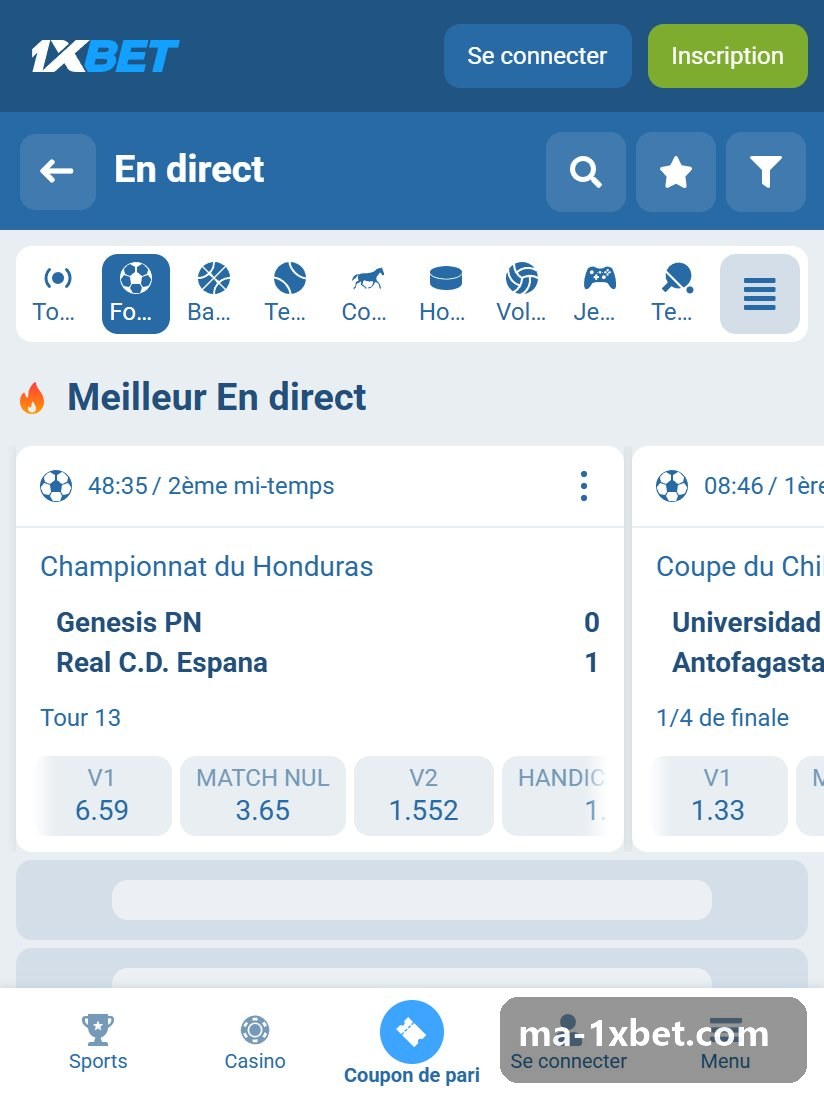

Under the scoreline sit the minute, the pressure counters and the price column. When an official's decision changes the balance of the meeting, the repricing is immediate, and how far it goes depends on how much of the contest is left. A goal, a dismissal or a penalty award rewrites that column at once, so the number seen a second earlier is not the number the coupon accepts.
Following a few minutes of live play tells more than a summary: a panel compresses an hour of action into one row and loses the order events came in. Reading a football match means watching where the ball spends its minutes, not only what the scoreline says. A sending-off often moves the price more than a goal: the short-handed side drops deep, gives up the ball, and handicap and goal lines are rewritten straight away. Such turns arrive without warning, and the market answers before the crowd does.
Each sport has its own freeze points, such as a dangerous attack, a set point or the siren ending a period, and the suspensions map onto those moments rather than falling at random. At the interval the list shrinks to the markets that survive a break and reopens when play restarts; a long stoppage for treatment or a video review does the same.
Live markets on this fixture
A careful bettor weighs every available option before staking. The in-play list for football is built in layers: the result, then goals, then the small events that repeat dozens of times in a game. The highest stake ceilings sit on these central positions, while side options accept noticeably smaller amounts. Those base lines stay open almost from kick-off to the final whistle.
As the date approaches the sheet fills out: late lines arrive once the uncertainties clear, so a list checked too early gives a false picture of the final offer. Depth follows coverage, so a widely tracked fixture opens corner and card lines that a quieter one never shows. Where a draw is possible, draw no bet returns the full stake if the meeting finishes level, while double chance covers the draw at a shorter price. The first protects your money; the second locks in a smaller win. The table below shows what each family settles on.
Market | What the bet covers | How it behaves in play |
|---|---|---|
1X2 live | A win for Arbroath, a draw, or a win for Airdrieonians from the current score | Reprices after every goal and every red card |
Total goals | Goals from both sides together, over or under the posted line | The line drops as the minutes run out |
Asian handicap | One side starts the coupon with a goal advantage | Moves as soon as the game turns one-sided |
Both teams to score | Whether Arbroath and Airdrieonians both find the net | Closes once the answer can no longer change |
Next goal | Which side scores next, or nobody does | Settles at the next goal or at the whistle |
Corners and cards | The count of corners or cards in a half or across the game | Runs while play continues, pauses at the break |
Correct score | The exact scoreline at the end of the match | Swings hardest in the seconds after a goal |
When the whole idea rests on how the meeting will start, waiting for the live phase to confirm that start beats locking the position before play begins. A market taken because it matches what is happening on the pitch lasts longer than one taken out of habit, and the lines above are read against the clock.
What moves the price right now
A fresh striker comes off the bench with twenty minutes left and tired legs on the other side — that is the moment the next-goal and the over markets suddenly start to look tempting. Each of those turns reaches the coupon within seconds. The next-goal market prices the state of play more than raw strength, so a weaker side throwing everything forward can turn favourite to score the following one. One goal shifts the totals line, the handicap and the result price in the same refresh.
When a fixture carries weight in the standings or pits neighbours against each other, challenges fly in higher, dissent grows, and the first bookings arrive well before the interval. A red card leaves a side a player short for the rest of the game, and the market treats the remaining minutes as a different match. Added time carries more weight after the break, with stoppages piling up and changes running one after another, so a match is still alive when it already looks over. The two halves seldom carry the same rhythm, and the second is where the goal lines usually get decided.
Having a genuine free-kick specialist changes the value of every foul conceded near the box; a routine block on the edge suddenly becomes a clear chance at goal. Corners and free kicks near the area are the shortest route to a goal when a side cannot build through the middle. The fourth official's board alone is enough to move the prices; the market reads the coach's intention before the substitute has even touched his first ball. Fresh legs after the hour change the pressing distance, and the goal markets answer within a few minutes.
Match statistics: what they show and what they hide
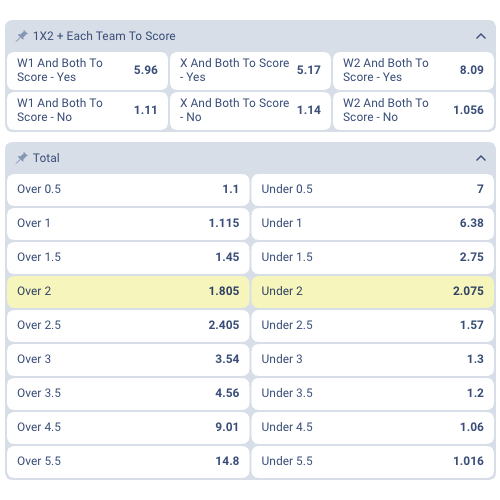
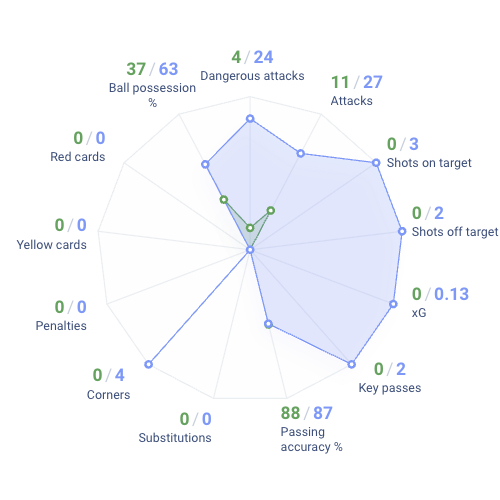
Where the goals come from counts as much as how many: a side scoring mainly from dead balls depends on the height of its players and the corners it wins, and a tall, disciplined opponent takes that supply away. Possession, shots, shots on target, corners and dangerous attacks describe pressure, and pressure is what the goal markets price. Head-to-head history piles up games played by other players, under other coaches, with other aims. The club name survives; the team that wore the shirt has long since gone. A side can hold the ball for an hour without troubling the keeper, and the counter still reads in its favour.
A goalkeeper who takes a knock almost always stays on, since the position rarely gets substituted mid-game; the clue sits in his long kicks, which shorten well before any change is considered. One goalkeeper in form wipes out the gap the shot count promised. A run resting on one decisive figure stays fragile by design, since a single absence can undo in one round what took weeks to build. Recent form of Arbroath and Airdrieonians explains the opening prices, then loses weight with every minute the fixture actually plays.
Placing a bet while the game is live
Everything is designed to be fast and free of hassle. The route is identical on a computer and on a phone.
On a phone the programme comes folded day by day; one tap on a header opens the block, another closes it, and the scrolling stays short. The football list in live football holds the fixture in place from kick-off to the final whistle.
Tap the price of the market you want. One control empties the whole slip at once, with no need to remove the lines one by one. The coupon stores that figure as it stood at the tap.
Enter the stake in dirhams and check the return the coupon calculates.
A market label states whether it covers the whole meeting or only a portion of it, and two neighbouring lines can look alike while spanning very different stretches. A price that moved while you were typing comes back for acceptance instead of being swapped in silently.
Follow the ticket in the list of open bets, where settlement appears once the result is official.
Where the option is offered, a running bet can be closed early for the sum shown at that moment, a judgement about the minutes still to come rather than the final score.
Prematch and live on the same fixture
A pre-match slip settles once, when the meeting ends, while part of the live menu pays out during play itself, with funds back on the balance before the finish. The prematch line opens days ahead on the football line and closes the moment the referee starts play. Long-term markets such as the championship winner are taken early, since their prices carry the most before the hierarchy settles into place. A price taken early carries the risk of team news; one taken in play carries the risk of the next attack.
Live markets freeze for a moment when something decisive happens and reopen with prices already rewritten. A position opened before kick-off and an addition made twenty minutes in can sit in the same ticket list. In-play football makes every attack matter, as odds rise and fall with each shot and counterattack. The board stays open to the last action, and the rest of the live section works on the same clock for every other sport in play.
Money, app and help in Morocco
Funding the account through the same instrument you intend to withdraw with later saves a round of extra checks on the day withdrawal becomes the question. An account held in Morocco is funded and settled in dirhams, so no conversion stands between the deposit and the stake. The moment a request is sent, the amount leaves the available balance and can no longer feed a betting slip while the operation is being decided. A withdrawal is requested from the same cashier screen, which lists the methods open for it at that moment.
Method | What it is | Currency | Suits a bettor who |
|---|---|---|---|
CIH | Moroccan bank, cards and transfers | MAD | already banks there and pays from the banking app |
Attijari | Moroccan banking network with branches nationwide | MAD | holds a card from the same group |
Al Barid | Postal banking service | MAD | uses the post office network every day |
Lbankalik | Everyday Moroccan banking service | MAD | handles the account mostly from a phone |
Cash Plus | Cash payment network with staffed counters | MAD | pays in notes at a counter, without a card |
The app speaks first, signalling when a line opens or a fixture is about to begin, while the site waits to be opened before it shows anything at all. A phone left on the fixture screen shows the same prices as a computer, and the mobile app page sets out what the download asks for. Add a championship to favourites and its fixtures open first every time. A goal alert lands faster than a manual refresh, which decides whether a market is still open when you reach it.
Writing from inside the logged-in account removes the identity step altogether, as the agent already knows who is talking and the exchange opens on the substance. A stake that did not go through is easiest to raise from inside the account, where the ticket carries its own number. A cash deposit made through Cash Plus is traced by its transaction number, so a kept receipt gives the adviser precisely what he looks for. The reply arrives in the same window, and the thread keeps the history.
After the final whistle
A filter by discipline trims the list down to what matters: the competition you follow stays alone on screen, without the other events running at the same time. Settlement runs against the official result, and the ticket moves from the open list into the history. Everything sits in one place, the entrants, the calendar and the prices, so there is no walking from one section to another to gather these pieces together. The competition carries on, and the next round for Arbroath and Airdrieonians appears on the same list within hours.
Experience the event from the heart of the action. A game still in play keeps its board alive to the last kick, and the list rolls on to the next kick-off as soon as this one closes.