

- live odds and in-play markets
What is and where it runs
Online betting can turn a quiet evening into a real occasion, with every moment of the event followed closely. This page follows from the first whistle to the last, and the board refreshes on its own while the ball is in play. The fixture belongs to , so the stage of that competition applies to this game too.
Officials come from the organiser's own list instead of being agreed between the two camps, and their calls follow one framework shared by every meeting on the programme. The level of a competition decides how deep the in-play list runs. The entry filter gives it away: an event open to anyone who registers has nothing like the density of one where a place is earned on previous results. A meeting of and in a lower division opens fewer markets than a top-flight fixture, and the board shows only what is genuinely trading at that minute.
Head-to-head history sits beside the live board for a reason. Spend a minute on what these two share in their history before confirming anything, as patterns from earlier meetings often come back. Earlier meetings of and describe habits rather than outcomes, while the standings and the rest of the calendar stay on for anyone checking what this result changes.
Reading the board while the game runs
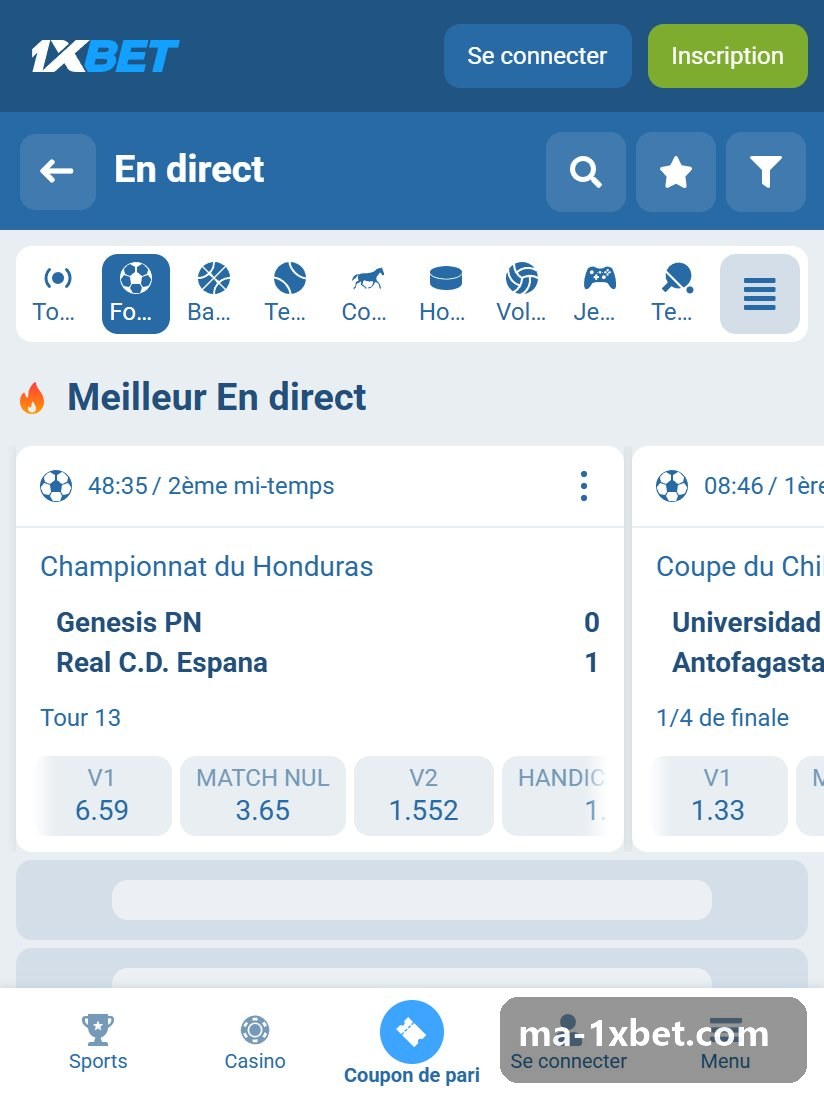

Under the scoreline sit the minute, the pressure counters and the price column. Conditions at the venue matter too: wind, rain, the state of the ground or the surface change what competitors can actually produce, and the line follows behind. A goal, a dismissal or a penalty award rewrites that column at once, so the number seen a second earlier is not the number the coupon accepts.
Panels count everything since the start, while the recent passage often tells the opposite story, so read the last stretch before trusting the cumulative total. Reading a football match means watching where the ball spends its minutes, not only what the scoreline says. How a goal arrives matters as much as the goal itself, for a deflected corner proves no superiority, and a market reacting to the scoreboard rather than the play sometimes leaves a gap worth taking. Such turns arrive without warning, and the market answers before the crowd does.
A bet confirmed a moment before the freeze stays accepted at the price that stood then; closing the market does not reach back into tickets already registered. At the interval the list shrinks to the markets that survive a break and reopens when play restarts; a long stoppage for treatment or a video review does the same.
Live markets on this fixture
Correct score carries the longest prices on the board and the narrowest path to landing. The in-play list for football is built in layers: the result, then goals, then the small events that repeat dozens of times in a game. As soon as the calendar publishes a pairing, the base appears, often days ahead of the meeting, and stays open right up to the start without changing shape. Those base lines stay open almost from kick-off to the final whistle.
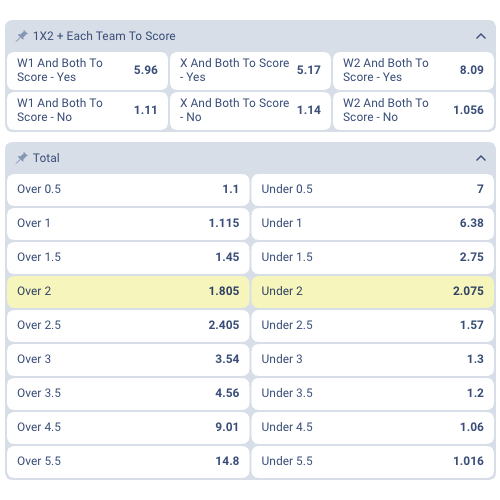
The same market name does not mean the same rule from one sport to another: a total or a handicap is not settled the same way everywhere, and the line's own terms are what counts. Depth follows coverage, so a widely tracked fixture opens corner and card lines that a quieter one never shows. Sharper lines cover the exact total, whether the total is odd or even, or a winning margin within a set range. They pay better than the main markets, in exchange for a precision that only the full course of the meeting can validate. The table below shows what each family settles on.
Market | What the bet covers | How it behaves in play |
|---|---|---|
1X2 live | A win for , a draw, or a win for from the current score | Reprices after every goal and every red card |
Total goals | Goals from both sides together, over or under the posted line | The line drops as the minutes run out |
Asian handicap | One side starts the coupon with a goal advantage | Moves as soon as the game turns one-sided |
Both teams to score | Whether and both find the net | Closes once the answer can no longer change |
Next goal | Which side scores next, or nobody does | Settles at the next goal or at the whistle |
Corners and cards | The count of corners or cards in a half or across the game | Runs while play continues, pauses at the break |
Correct score | The exact scoreline at the end of the match | Swings hardest in the seconds after a goal |
Running the same line across every fixture of the round shows where your own reading strays furthest from the posted price, and that fixture is the one worth taking. A market taken because it matches what is happening on the pitch lasts longer than one taken out of habit, and the lines above are read against the clock.
What moves the price right now
One heated tackle and the referee already reaches for his cards; in a tense match the bookings pile up faster than anyone expects, which is exactly why the total cards market gets interesting long before the first goal. Each of those turns reaches the coupon within seconds. The 90th minute settles nothing, because added time regularly flips totals and both-teams-to-score, and a slip is only judged at the final whistle. One goal shifts the totals line, the handicap and the result price in the same refresh.
With video review the punishment can still change after the whistle: a yellow sometimes turns red at the screen check, and card lines move with the second look. A red card leaves a side a player short for the rest of the game, and the market treats the remaining minutes as a different match. The half-time/full-time bet asks for the route as well as the outcome: behind at the break and in front at the end is a whole trajectory to call in one line. The two halves seldom carry the same rhythm, and the second is where the goal lines usually get decided.
A dead ball puts everyone level: a team that cannot build through the pitch no longer needs to cross it, one delivery and one header will do the job. Corners and free kicks near the area are the shortest route to a goal when a side cannot build through the middle. Some coaches keep faith with the same eleven and use only one or two windows, leaving a player carrying a knock out there because nothing behind him convinces. Fresh legs after the hour change the pressing distance, and the goal markets answer within a few minutes.
Match statistics: what they show and what they hide
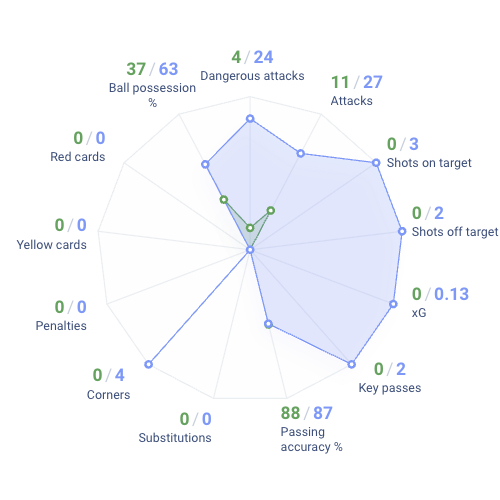
Cumulative totals flatten everything, so compare the most recent spell with the rest of the match, since pressure happening now matters more than dominance from the opening stages. Possession, shots, shots on target, corners and dangerous attacks describe pressure, and pressure is what the goal markets price. Head-to-head history piles up games played by other players, under other coaches, with other aims. The club name survives; the team that wore the shirt has long since gone. A side can hold the ball for an hour without troubling the keeper, and the counter still reads in its favour.
At many clubs the cup traditionally belongs to the second goalkeeper, and his name on the team sheet reflects a rotation settled long before matchday. One goalkeeper in form wipes out the gap the shot count promised. A handful of outings draws nothing solid. What repeats across a long stretch carries information, while what holds over only a few meetings stays noise. Recent form of and explains the opening prices, then loses weight with every minute the fixture actually plays.
Placing a bet while the game is live
Turning your choice into a real stake is refreshingly direct. The route is identical on a computer and on a phone.
A fixture row displays only the headline markets, and the small counter at its end tells how many more are waiting inside the full card. The football list in live football holds the fixture in place from kick-off to the final whistle.
Tap the price of the market you want. Two picks taken from the same meeting cannot sit together in an accumulator; the slip marks them as conflicting and waits until you keep just one. The coupon stores that figure as it stood at the tap.
Enter the stake in dirhams and check the return the coupon calculates.
Every accepted slip gets its own number and lands in the bet history, and a glance at that list confirms the stake really went through, especially after a patchy connection. A price that moved while you were typing comes back for acceptance instead of being swapped in silently.
Follow the ticket in the list of open bets, where settlement appears once the result is official.
Where the option is offered, a running bet can be closed early for the sum shown at that moment, a judgement about the minutes still to come rather than the final score.
Prematch and live on the same fixture
Mistakes made in advance usually trace back to a thin reading of the case; mistakes made live come from haste, from answering something you saw a second ago. The prematch line opens days ahead on the football line and closes the moment the referee starts play. Long-term markets such as the championship winner are taken early, since their prices carry the most before the hierarchy settles into place. A price taken early carries the risk of team news; one taken in play carries the risk of the next attack.
Betting here fits around your own rhythm. A position opened before kick-off and an addition made twenty minutes in can sit in the same ticket list. A favourite that falls behind gets its handicap re-cut at a price the pre-match board never showed, and that scenario is caught live rather than booked in advance. The board stays open to the last action, and the rest of the live section works on the same clock for every other sport in play.
Money, app and help in Morocco
Nothing forces you to discover a charge after the fact, since the form displays it before validation and the figure that will really land is known at the moment of pressing. An account held in Morocco is funded and settled in dirhams, so no conversion stands between the deposit and the stake. The moment a request is sent, the amount leaves the available balance and can no longer feed a betting slip while the operation is being decided. A withdrawal is requested from the same cashier screen, which lists the methods open for it at that moment.
Method | What it is | Currency | Suits a bettor who |
|---|---|---|---|
CIH | Moroccan bank, cards and transfers | MAD | already banks there and pays from the banking app |
Attijari | Moroccan banking network with branches nationwide | MAD | holds a card from the same group |
Al Barid | Postal banking service | MAD | uses the post office network every day |
Lbankalik | Everyday Moroccan banking service | MAD | handles the account mostly from a phone |
Cash Plus | Cash payment network with staffed counters | MAD | pays in notes at a counter, without a card |
The app speaks first, signalling when a line opens or a fixture is about to begin, while the site waits to be opened before it shows anything at all. A phone left on the fixture screen shows the same prices as a computer, and the mobile app page sets out what the download asks for. Bring the full betting experience to your phone. A goal alert lands faster than a manual refresh, which decides whether a market is still open when you reach it.
Evenings with a big fixture on concentrate the requests, and a question that can be asked in the morning comes back noticeably faster. A stake that did not go through is easiest to raise from inside the account, where the ticket carries its own number. On big-match evenings, sending the coupon number together with a screenshot cuts the back-and-forth with the adviser right down. The reply arrives in the same window, and the thread keeps the history.
After the final whistle
The list of pending bets doubles as a diary: every open selection carries the date and time of its meeting, and the schedule that concerns you writes itself. Settlement runs against the official result, and the ticket moves from the open list into the history. Between rounds the list shrinks to a handful of rows; as a busy phase approaches it stretches across several screens. The competition carries on, and the next round for and appears on the same list within hours.
The event is just moments away. A game still in play keeps its board alive to the last kick, and the list rolls on to the next kick-off as soon as this one closes.