

Koper - NK Aluminij - live odds and in-play markets
What Koper - NK Aluminij is and where it runs
In the hours before a big event, the atmosphere starts to crackle, and experienced bettors prepare well in advance. This page follows Koper - NK Aluminij from the first whistle to the last, and the board refreshes on its own while the ball is in play. The fixture belongs to Slovenia. League 1, so the stage of that competition applies to this game too.
The winner holds the title until the next edition, and that holder status follows them into every outing as the reference the rest of the field measures itself against. The level of a competition decides how deep the in-play list runs. The entry filter gives it away: an event open to anyone who registers has nothing like the density of one where a place is earned on previous results. A meeting of Koper and NK Aluminij in a lower division opens fewer markets than a top-flight fixture, and the board shows only what is genuinely trading at that minute.
Head-to-head history sits beside the live board for a reason. When the same side has come out on top in almost every meeting, the winner market draws directly on that record. Earlier meetings of Koper and NK Aluminij describe habits rather than outcomes, while the standings and the rest of the calendar stay on Slovenia. League 1 for anyone checking what this result changes.
Reading the board while the game runs
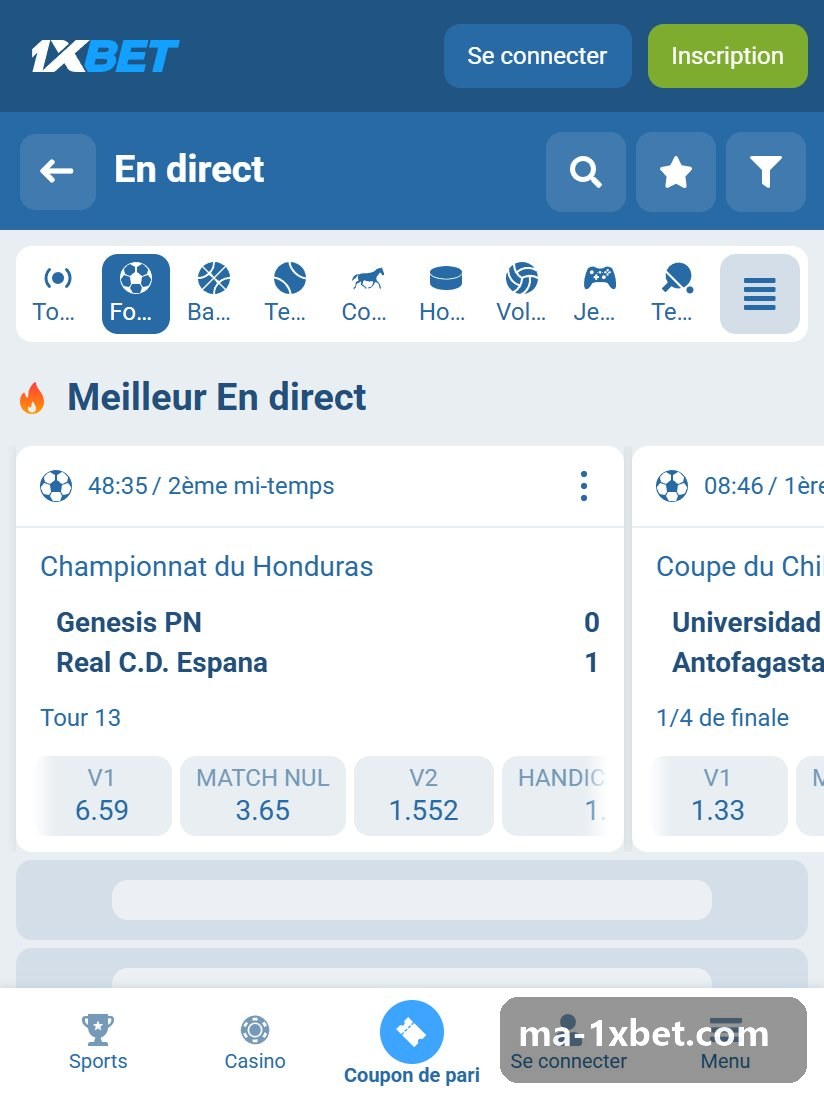

Under the scoreline sit the minute, the pressure counters and the price column. One tactical adjustment during the meeting, a change of approach or a reshaped plan is enough to move the line, often before the effect shows on screen. A goal, a dismissal or a penalty award rewrites that column at once, so the number seen a second earlier is not the number the coupon accepts.
Anything recorded before a participant left the play or was replaced describes a meeting that no longer exists; the panel keeps the trace, the contest has changed. Reading a football match means watching where the ball spends its minutes, not only what the scoreline says. Heavy rain arriving mid-match changes the very nature of the game, as the ball skids then holds up, short passing turns risky, and the side built on duels comes out ahead. Such turns arrive without warning, and the market answers before the crowd does.
One closed market points to something happening in the game; the whole meeting vanishing from the screen usually signals a data interruption, and it returns once the feed is restored. At the interval the list shrinks to the markets that survive a break and reopens when play restarts; a long stoppage for treatment or a video review does the same.
Live markets on this fixture
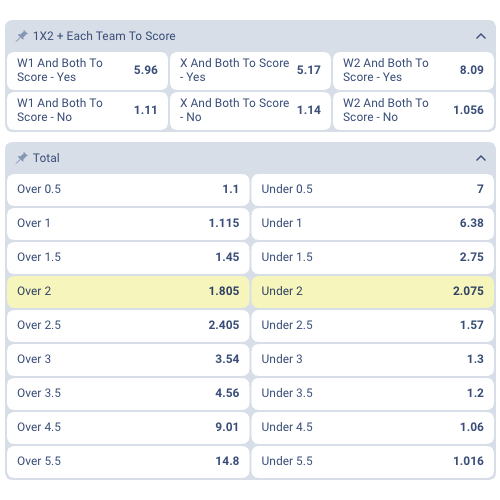
The richness of a match is measured by the breadth of its markets. The in-play list for football is built in layers: the result, then goals, then the small events that repeat dozens of times in a game. The highest stake ceilings sit on these central positions, while side options accept noticeably smaller amounts. Those base lines stay open almost from kick-off to the final whistle.
Depth makes it possible to stay on one fixture: working several angles of a meeting you actually know beats scattering stakes across games skimmed in passing. Depth follows coverage, so a widely tracked fixture opens corner and card lines that a quieter one never shows. Alongside the day's fixtures, long-term markets cover the competition as a whole, such as the eventual winner or qualification for a given stage. Your odds are locked at the moment you bet, even as the board keeps moving with every round. The table below shows what each family settles on.
Market | What the bet covers | How it behaves in play |
|---|---|---|
1X2 live | A win for Koper, a draw, or a win for NK Aluminij from the current score | Reprices after every goal and every red card |
Total goals | Goals from both sides together, over or under the posted line | The line drops as the minutes run out |
Asian handicap | One side starts the coupon with a goal advantage | Moves as soon as the game turns one-sided |
Both teams to score | Whether Koper and NK Aluminij both find the net | Closes once the answer can no longer change |
Next goal | Which side scores next, or nobody does | Settles at the next goal or at the whistle |
Corners and cards | The count of corners or cards in a half or across the game | Runs while play continues, pauses at the break |
Correct score | The exact scoreline at the end of the match | Swings hardest in the seconds after a goal |
In fixtures with outsized stakes the logic of the table weakens, and markets built on it, the outcome first among them, give way to lines less tied to hierarchy. A market taken because it matches what is happening on the pitch lasts longer than one taken out of habit, and the lines above are read against the clock.
What moves the price right now
The ball hits the net, the arms go up, then the referee reaches for his ear: while the video check runs the markets freeze, and a goal chalked off sends the odds straight back where they came from. Each of those turns reaches the coupon within seconds. The opening goal settles half of the both-teams-to-score question, and the rest hangs on whether the side behind still keeps a genuine attacking route forward. One goal shifts the totals line, the handicap and the result price in the same refresh.
A foul inside the area punished with both a penalty and a red turns a match on a single action: a goal all but given, and a man missing until the final whistle. A red card leaves a side a player short for the rest of the game, and the market treats the remaining minutes as a different match. The half-time/full-time bet asks for the route as well as the outcome: behind at the break and in front at the end is a whole trajectory to call in one line. The two halves seldom carry the same rhythm, and the second is where the goal lines usually get decided.
From a corner, height counts for more than technique: big defenders arriving in front of goal are worth more than an elegant midfielder who loses every aerial duel. Corners and free kicks near the area are the shortest route to a goal when a side cannot build through the middle. Taking off a booked player before he collects a second card is a defensive decision in disguise; the coach would rather lose a starter than finish the match with ten. Fresh legs after the hour change the pressing distance, and the goal markets answer within a few minutes.
Match statistics: what they show and what they hide
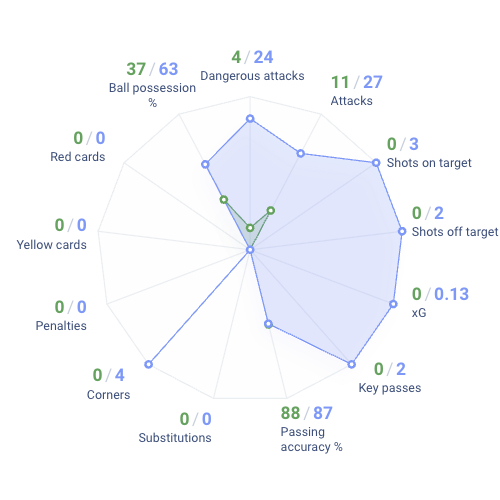
Where the goals come from counts as much as how many: a side scoring mainly from dead balls depends on the height of its players and the corners it wins, and a tall, disciplined opponent takes that supply away. Possession, shots, shots on target, corners and dangerous attacks describe pressure, and pressure is what the goal markets price. Charts splitting goals into fifteen-minute bands inflate the last one mechanically, because it swallows stoppage time, and every team ends up looking like a late scorer. A side can hold the ball for an hour without troubling the keeper, and the counter still reads in its favour.
How fast the ball leaves the keeper's hands after a save separates two profiles: one launches a counter within a second of the stop, the other holds on and lets the opposing block settle back into place. One goalkeeper in form wipes out the gap the shot count promised. A defeat suffered while visibly saving energy on the eve of a bigger appointment carries little weight, since the competitor chose to protect itself for what mattered more. Recent form of Koper and NK Aluminij explains the opening prices, then loses weight with every minute the fixture actually plays.
Placing a bet while the game is live
The line opens several days before the event. The route is identical on a computer and on a phone.
On a phone the programme comes folded day by day; one tap on a header opens the block, another closes it, and the scrolling stays short. The football list in live football holds the fixture in place from kick-off to the final whistle.
Tap the price of the market you want. Whatever sits in the slip survives a change of page and even a closed tab, waiting exactly as you left it when you come back to your account. The coupon stores that figure as it stood at the tap.
Enter the stake in dirhams and check the return the coupon calculates.
A market label states whether it covers the whole meeting or only a portion of it, and two neighbouring lines can look alike while spanning very different stretches. A price that moved while you were typing comes back for acceptance instead of being swapped in silently.
Follow the ticket in the list of open bets, where settlement appears once the result is official.
Where the option is offered, a running bet can be closed early for the sum shown at that moment, a judgement about the minutes still to come rather than the final score.
Prematch and live on the same fixture
Accumulators come together comfortably before the start, pick by pick across several days, whereas live lines suspend too often for a slip to be built in peace. The prematch line opens days ahead on the football line and closes the moment the referee starts play. Long-run numbers, such as results over the season and scoring averages, can be read calmly beforehand, and they weigh more than the impression left by one recent outing. A price taken early carries the risk of team news; one taken in play carries the risk of the next attack.
Before the game the work rests on tables and past meetings, while live it is the counters ticking in real time that steer the stake. A position opened before kick-off and an addition made twenty minutes in can sit in the same ticket list. Cash-out lets you close a bet before the final whistle and lock in part of your position early. The board stays open to the last action, and the rest of the live section works on the same clock for every other sport in play.
Money, app and help in Morocco
While a mid-match deposit goes through, the price you had spotted keeps moving; funding the account before the game keeps the chosen odds within reach. An account held in Morocco is funded and settled in dirhams, so no conversion stands between the deposit and the stake. The moment a request is sent, the amount leaves the available balance and can no longer feed a betting slip while the operation is being decided. A withdrawal is requested from the same cashier screen, which lists the methods open for it at that moment.
Method | What it is | Currency | Suits a bettor who |
|---|---|---|---|
CIH | Moroccan bank, cards and transfers | MAD | already banks there and pays from the banking app |
Attijari | Moroccan banking network with branches nationwide | MAD | holds a card from the same group |
Al Barid | Postal banking service | MAD | uses the post office network every day |
Lbankalik | Everyday Moroccan banking service | MAD | handles the account mostly from a phone |
Cash Plus | Cash payment network with staffed counters | MAD | pays in notes at a counter, without a card |
Sections stay loaded on the device, so moving from one competition to another happens without the blank pause that a full page reload brings. A phone left on the fixture screen shows the same prices as a computer, and the mobile app page sets out what the download asks for. Topping up through Cash Plus or Al Barid works without leaving the app. A goal alert lands faster than a manual refresh, which decides whether a market is still open when you reach it.
Naming the exact moment the problem happened helps the matching record surface, as a whole day stays far too wide a window to search through. A stake that did not go through is easiest to raise from inside the account, where the ticket carries its own number. A page that will not load in the app is usually sorted out once the adviser has the app version and the exact time of the failure. The reply arrives in the same window, and the thread keeps the history.
After the final whistle
Following a tournament also means watching the price move: the same outcome is not valued alike when the line opens and just before the meeting starts. Settlement runs against the official result, and the ticket moves from the open list into the history. The spread of markets offered on a single meeting goes past what a paragraph can list, and the page lays them out in full, line by line. The competition carries on, and the next round for Koper and NK Aluminij appears on the same list within hours.
Once play starts, the in-play list comes with its own set of markets. A game still in play keeps its board alive to the last kick, and the list rolls on to the next kick-off as soon as this one closes.