
Handball before the throw-off: Morocco, the competitions in the line and how bets are settled
Handball is a team sport played, in its indoor form, on a court 40 m long and 20 m wide, with a goal 3 m wide and 2 m high at each end. Each team may have no more than seven players on court at once, normally a goalkeeper with six outfield players, who pass and dribble the ball towards the opposing goal. A goal counts when the ball has wholly crossed the goal line; more goals than the opponents means a win, and an equal number, none at all included, a draw.
For players aged 16 and above, regular playing time is two halves of 30 minutes. Unless another source is named, the playing rules cited here come from the IHF's Rules of the Game for indoor play, 1 July 2025 edition; beach handball has separate IHF rules.
Morocco on the handball map: Rabat, Casablanca and Kigali
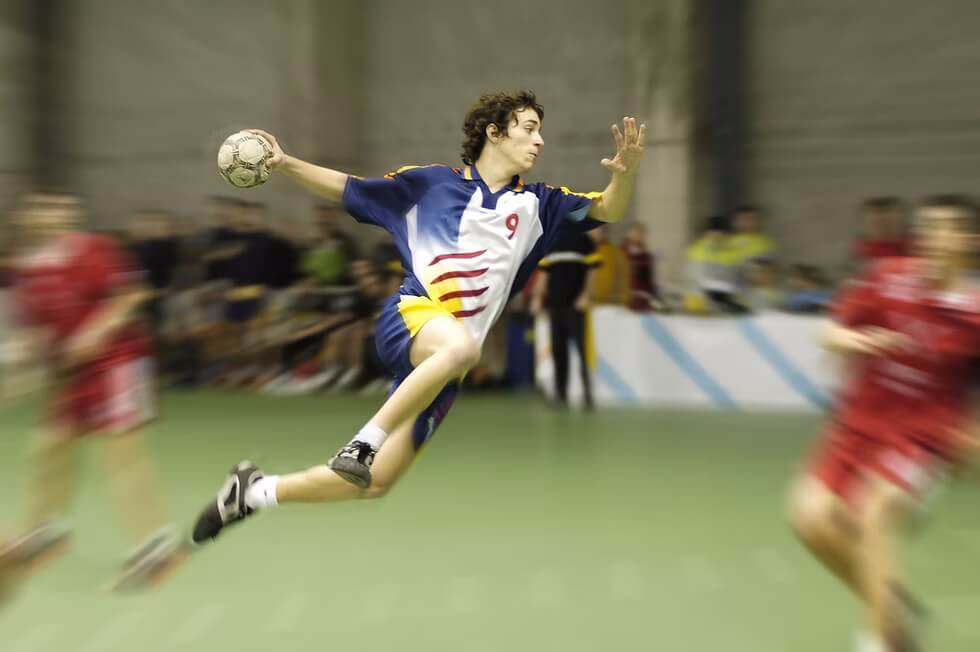
The sport is run in Morocco by the Royal Moroccan Handball Federation (FRMHB), which is based in Rabat and has been an IHF member since 1960. Casablanca hosted the first IHF Men's Under-17 World Championship in 2025.
At the 2026 African Championship, held in Kigali (Rwanda) between 21 and 31 January, Morocco were runners-up in Group D after beating Benin 52:28 and Congo 39:31 and losing 33:28 to Cape Verde. That took them into the main round. A 27:20 defeat by Angola in the first placement match, for places 5 to 8, then cost them the last ticket to the 2027 World Championship in Germany. In their final game, against Guinea, regular time ended 33:33; under the tournament's rules no overtime followed, and Morocco won the 7-metre shoot-out 5:4 for a 38:37 result and seventh place.
Regular time first: how the site settles handball bets
Under section 10.13 ("Handball") of the betting rules on the site, a bet is settled on the regular-time result, meaning 60 minutes in two halves of 30. Overtime and 7-metre shoot-outs are counted only in some markets, such as bets on qualification, to the next round or to another league, on the winner of the competition and other similar bets. The match result is therefore read after 60 minutes, and a level score at that point counts as a draw.
1X2: event lists show "W1", "Draw" and "W2"; the "1X2" group on a match page gives W1, X and W2.
Double chance: "1X", "12" and "2X" each put two of the three outcomes into one selection.
Handicap: goals are added to or taken from the real score, and a tie once the handicap is applied returns the stake, which is what a drawn match means for "Handicap 1 (0)" or "Handicap 2 (0)".
Totals: over or under the quoted number of goals, counted over the sport's playing time unless the market says otherwise.
Handicaps, goal totals and the individual totals "IT1" and "IT2" vary from match to match. The rules also describe a top goalscorer bet, settled with overtime but without the shoot-out, "2-Minute Suspension" bets and bets on yellow cards, on the number of 7-metre throws awarded and on a player's goals in regular time.
Men's EHF cups, French women's league and Japan's League H
The men's EHF Champions League switches to a new format in 2026/27: 24 clubs in six groups of four from 9 September to 29 October 2026, with the top two in each going on to a main round of two groups of six. The four leading clubs of each main-round group then contest two-legged quarter-finals from 24 March to 1 April 2027, where clubs level on points are separated by goal difference and then 7-metre throws, with no extra time played. Cologne's EHF FINAL4 on 12/13 June 2027 stages the semi-finals and the final as one-off matches.
France's women's first division (D1F) has 12 clubs in 2026-27 and a 22-round regular season from 29 August 2026 to 17 April 2027. Finals follow from 21 April to 23 May 2027, with the top four playing two-legged semi-finals and a two-legged final for the title; a tie that ends level goes to goal difference, followed by away goals and finally a shoot-out. Brest Bretagne Handball are the reigning champions.
Clubs finishing third or fourth in their Champions League group carry on in the men's EHF European League: they join the top two from each of its eight groups, played from 29 September to 2 December 2026, in play-offs held from 9 February to 2 March 2027.
Japan's top league, League H, brings together 15 men's and 11 women's teams in 2026-27, with a regular season between 12 October 2026 and 23 May 2027 and play-offs from 4 to 6 June 2027.
Once play starts: sanctions, overtime and live betting
The IHF's punishments are a warning (yellow card), a 2-minute suspension and a disqualification (red card). A suspended player sits out 2 minutes of playing time and cannot be replaced, leaving the team a player short, and a third suspension for the same player means disqualification. One of the offences that earns a 7-metre throw is the illegal destruction of a clear scoring chance, wherever it happens on the court.
If regular time ends level and a winner is needed, IHF rules call for overtime of two 5-minute halves after a 5-minute break, then a second overtime if the teams are still level. Beyond that, the competition's own rules decide, for instance 7-metre throwing with five shooters per team, alternating with the opponents.
Handball is open for betting on 1xBet ahead of the throw-off (Line) and during play (Live); matches already in progress are listed under handball matches being played.
Other sports have their own pages within the pre-match section for all sports.
Bets are placed from an account held in Moroccan dirhams (MAD), opened through the registration page.