
Northern Ireland. FAI Intermediate Cup - odds and betting markets
⚽ What Northern Ireland. FAI Intermediate Cup is and what its season decides
Northern Ireland. FAI Intermediate Cup is a football competition with its own entry rules, its own calendar and its own way of producing a winner. Venues are not negotiable either: the organiser allocates sites, alternates hosting or draws lots, and entrants learn their programme at the same moment as the public does. Reading a price starts with knowing whether the trophy is settled over a long table or a short knockout run. Depth shows in how many can realistically win: when only a handful of entrants have a case, the average level stays low even if the very top is brilliant. Field strength explains why some ties look decided on paper and others turn on one mistake. Prices go up on the board well before the event, then shift each time fresh news about the participants lands. Fans in Morocco reach it from the football section and work down to the day they want.
Format drives everything that follows it. In a league played across a full season a single slip can be recovered later, and that safety margin pushes teams to manage their energy instead of risking everything. A table rewards sides that stay steady over many rounds, while a bracket rewards whoever survives one bad night. The calendar forces a choice: some clubs save their first team for the league race and field reserves in the cup, so the badge on the shirt stops describing the real strength on the pitch. Once you know which of the two you are watching, a draw carries a different value for each side.
The trophy is rarely the only thing on the line. The market's pecking order is drawn right here: opening prices for the following edition are built on what the final standings showed, not on ambitions announced beforehand. Some clubs chase a ticket to a bigger stage, others fight to hold their level, and a few arrive with nothing left to gain. When only a win keeps a club mathematically alive, a draw becomes worthless: the block pushes up around the hour, the full-backs stop tracking back, and the closing stretch opens right up. Motivation of that kind reshapes team selection far more reliably than reputation does. Those discovering this level pay dearly through the opening weeks while they work out its tempo, and a good number of them look far more solid later in the run. The same pairing carries a different weight depending on when it lands, so scan the full football line before settling on a fixture.
📅 Calendar: when Northern Ireland. FAI Intermediate Cup matches run

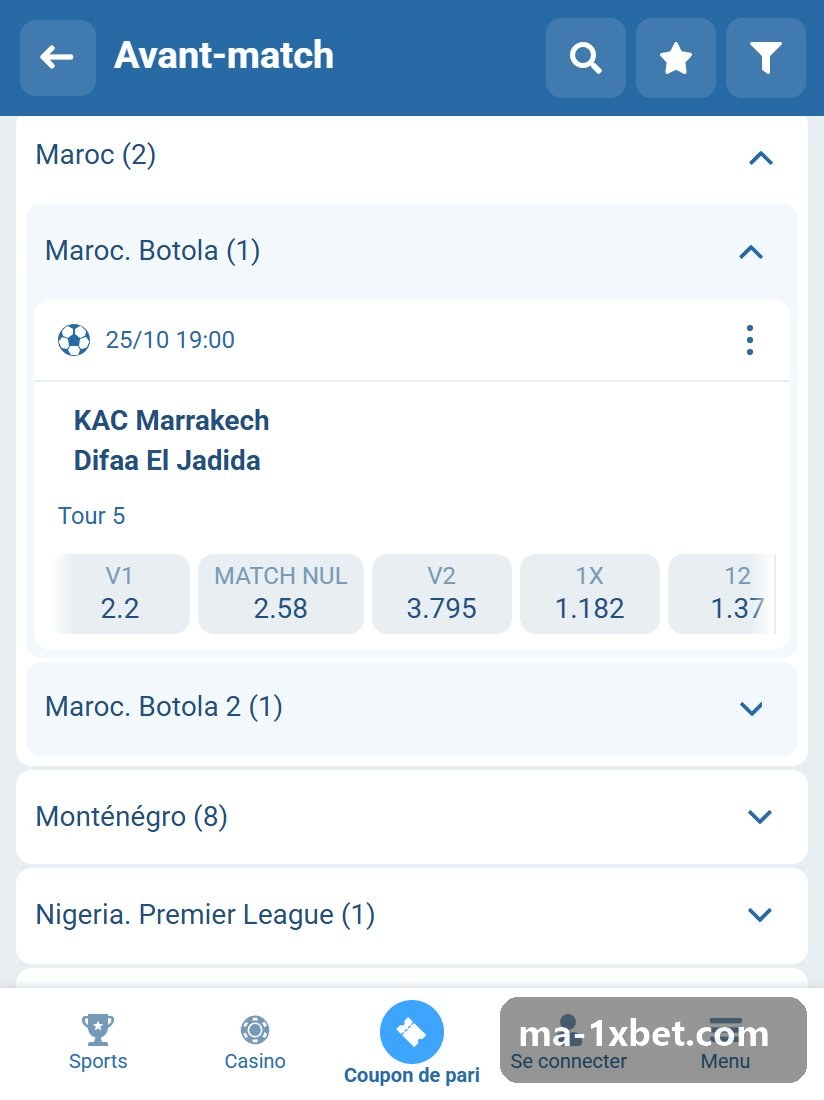
Fixtures rarely sit at one fixed hour. A round squeezed between two closely spaced dates cuts the recovery of everyone involved, a scheduling detail that shows in how fresh they look at their next appearance. Kick-offs are spread across the week so broadcasts do not collide, and two teams in one round can play a day apart. A knockout bracket runs on its own clock: once it starts, the gap between rounds narrows and a participant can be out there twice inside the same week. Read the time printed on the fixture card in Moroccan hours, not the one quoted by a foreign channel.
The line does not appear all at once either. Coming back to the same market at two different moments changes what you see: what was posted at opening bears little resemblance to what sits there on the day itself. Early markets are thin; the full set arrives closer to kick-off, once squads and venues are confirmed. Returns and absences cluster around stoppages, and the field lining up on resumption rarely matches the one that contested the last round before the break. After a pause the first round back behaves oddly, and prices carry that uncertainty.
Markets on Northern Ireland. FAI Intermediate Cup and when each one fits
Correct score carries the longest prices on the board and the narrowest path to landing. The result market is where most coupons begin, and the rest of the list is built around it. The main handicap or total figure is the middle rung of a ladder, with alternative lines stacked above and below at prices that track the distance. Goal totals shift the question away from who wins and towards how open the game will be. Every extra line is also a building block for a combined bet: a well-stocked sheet multiplies the assemblies possible across one round, provided each leg of the build is understood on its own. Corners, bookings, halves and individual performances only make sense once you hold an opinion about the shape of the match.
Market | What you predict | When it fits |
|---|---|---|
1X2 | Home win, draw or away win | A clear favourite, or a game you have read closely |
Double chance | Two of the three outcomes together | An outsider you trust to stay alive |
Over / Under goals | Whether the game passes a stated goals line | Two attacking sides, or a cautious pairing |
Both teams to score | Whether each side finds the net | Open games where neither defence convinces |
Handicap | The outcome after a virtual head start | A mismatch where the plain win price is too short |
Draw no bet | The winner, with the stake back on a level score | A tight Northern Ireland. FAI Intermediate Cup tie with no obvious favourite |
Available time belongs in the equation, and with no way to watch the meeting, a position that needs no in-play management is the better fit. Choosing between them is mostly matching the market to the information you actually hold. Asking one meeting to be controlled from the start and then to swing in its closing stage asks it to be two different meetings inside the same ticket. A long chain of selections looks attractive because the return grows with every addition, yet each extra leg is another way for the coupon to die.
Inside the match: what moves the price
Odds stop being a forecast the second the whistle goes. Conditions at the venue matter too: wind, rain, the state of the ground or the surface change what competitors can actually produce, and the line follows behind. A goal, a dismissal or a long spell of pressure rewrites every line on the coupon within seconds. Watch who sets the tempo. The side that decides when the meeting speeds up and when it slows holds an edge that rarely reaches the figures column. Following the play itself beats reading the scoreboard: a team a goal ahead and camped in its own half is in more danger than the score admits. Goalless at the break, and the second half turns into a contest of its own: attacking substitutions, higher lines, and a second-half totals market that bears no relation to the prematch one. Almost everything that unfolds is a variation on those patterns.
A goal against the run of play rewrites the reading of the game: possession and territory count for little once the opponent is packed behind the ball and comfortable. Goals arrive in clusters rather than on a tidy schedule, and a long stalemate can produce two inside five minutes. The opening minutes are mostly about measuring each other, with compact blocks, few risks taken in one's own half, and a first period that seldom bursts open straight away. The second half brings tired legs, wider gaps and coaches who have spent their first ideas. An early yellow shown to a defender weighs long before any red, since against a quick winger he can no longer tackle at full commitment and his flank turns into a target. Those turning points are where live prices offer the most and forgive the least.
Discipline shapes a tight second half more than any tactical plan. When a fixture carries weight in the standings or pits neighbours against each other, challenges fly in higher, dissent grows, and the first bookings arrive well before the interval. An early booking stops a defender tackling, and the flank behind him becomes an invitation. For some sides a long throw works as an extra corner, turning every ball out of play near the box into a direct delivery toward the penalty spot. Dead-ball situations then settle a surprising share of matches, above all when open play has dried up.
Extra time opens one more window, sending a completely fresh player out against exhausted legs, and the winning goal frequently comes from that imbalance. Fresh attackers change the speed of a game at once, and a change made well before the hour signals an abandoned plan. After a long interruption, for weather or floodlights, the reopening happens in stages: the main outcomes return first, and the side markets light up again afterwards. Betting freezes while the referee deals with an incident, so a selection may return at a different number — re-read the coupon before confirming.
🔍 What to check before betting on Northern Ireland. FAI Intermediate Cup
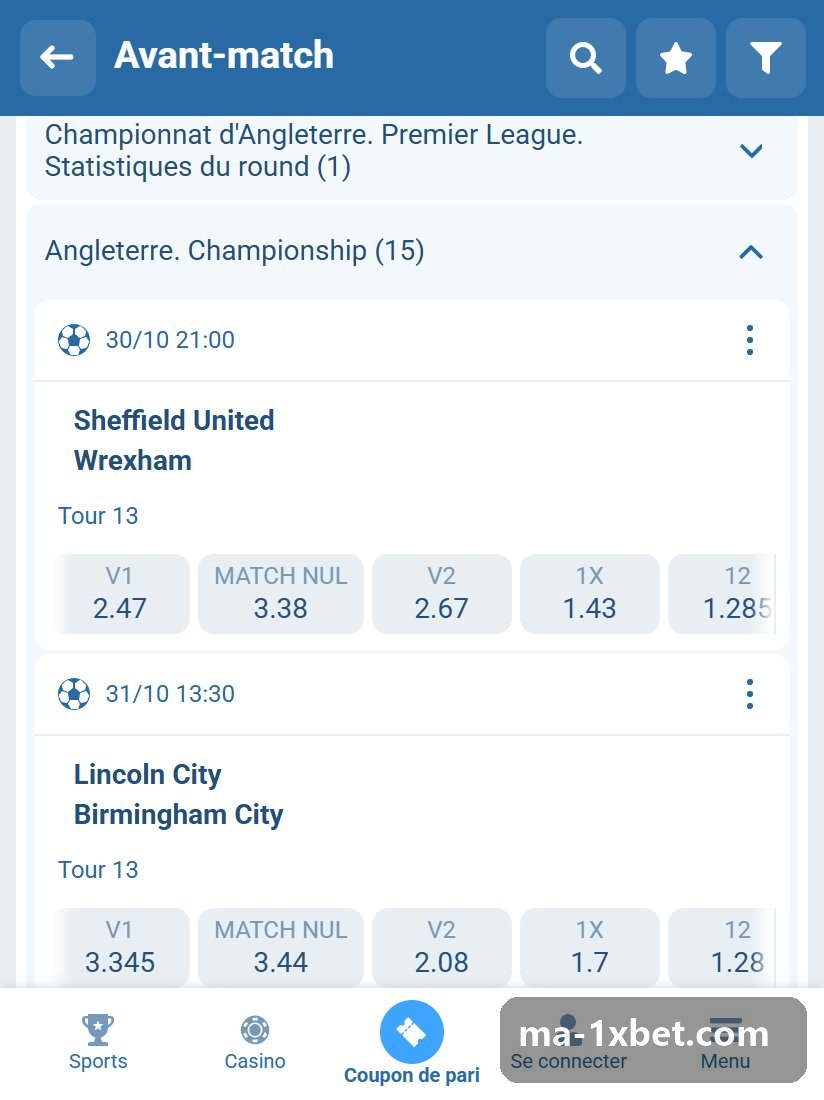

Preparation costs less than a lost coupon. A newcomer to the competition treats every appearance as proof of belonging, and that particular hunger cannot be guessed from where they currently sit in the table. A side with nothing to play for behaves differently from one that still needs points, and the team sheet shows it first. A run is worth only as much as the opponents inside it; stacking wins against the weakest opposition prepares nobody for the first genuine test of the competition. Recent results say more when you look at who they came against than when you simply count them. Lighting, the visual backdrop, the acoustics, the exact dimensions of the playing area: a visitor gets one training session to map them, while the regular has had years. Pitch dimensions, surface quality and travel distance all leave traces in the numbers.
At a neutral venue the home label covers nothing: both teams travel, both sleep in a hotel, both meet the pitch on the same day, and home records stop being useful. Home advantage is no constant: enormous for some clubs, nearly absent for others. Dead-ball quality drops with the regular taker's fatigue — flatter crosses, shorter corners — and situations that used to produce goals stop producing them. A team playing its third game in a single week rotates, defends deeper and concedes late. An arrival in mid-campaign reshuffles the pecking order overnight. The squad watched at the start is no longer the same one, and assumptions built on the old lineup quietly collapse. Depth separates the sides that survive a congested block from the ones that come apart in it.
A goalkeeper who takes a knock almost always stays on, since the position rarely gets substituted mid-game; the clue sits in his long kicks, which shorten well before any change is considered. A goalkeeper in form holds scorelines that every other number says should have collapsed. Watering the grass before kick-off is a deliberate choice: a wet surface makes the ball slide and suits teams built on quick passing. That call belongs to whoever is hosting. Heat, wind and a heavy pitch pull totals down and make long passing far less reliable. Points and performance drift apart: a side creating plenty and finishing badly tends to convert eventually, and its position catches up with its chances more often than the other way round. Numbers help most when you already know which question you asked them.
A goalkeeper leading the saves chart usually plays behind the leakiest defence, since that total counts shots faced long before it measures ability. Averages hide the matches that produced them, and a scoring record built against weak opposition says little about facing an organised defence. Preparation matches exist to test ideas and condition, not to be won, so drawing a pecking order for the competition from them means grading a rehearsal that nobody was playing to win. Treating a famous badge as a guarantee is expensive: the name on a shirt does not defend corners.
How to place a bet on Northern Ireland. FAI Intermediate Cup
Turning your choice into a real stake is refreshingly direct. The route from the main betting section to a confirmed coupon is short once you know where each step lives. A fixture row displays only the headline markets, and the small counter at its end tells how many more are waiting inside the full card. The order stays the same on desktop and phone.
Sign in to the account you opened in Moroccan dirham, so stakes and returns show in MAD.
Open football, pick Northern Ireland. FAI Intermediate Cup from the list of competitions and select the fixture you want.
Tap the odds beside your selection to send it to the coupon. The stake box behaves differently by type: an accumulator takes one stake covering the whole chain, while a system spreads that same amount across every combination it builds. Single, accumulator and system sit on separate tabs of the same slip.
Enter the stake in MAD and check the return the slip calculates.
Confirm and wait for the acceptance message. In play, confirmation runs through a short acceptance window: the bet exists once the slip comes back accepted, not the instant the finger lands on the button. The bet then appears in your history right away.
Prematch and live: two different approaches
A pre-match slip settles once, when the meeting ends, while part of the live menu pays out during play itself, with funds back on the balance before the finish. Before kick-off you trade information for time: the market is calm and nothing forces a rushed decision. A price taken before the start is locked at validation, and later market moves no longer touch your slip. Value there comes from work done in advance rather than from reaction speed.
Pre-match and live are the two stages of the contest. In play the balance flips and the clock becomes the binding constraint, which suits anyone following the match as it unfolds. On nights when fixtures run in parallel, live picks from different grounds can be gathered into one accumulator, and the whole evening turns into a single ticket to follow. Following live football odds alongside the play shows a price and its reason at the same moment.
💳 Money, app and support in Morocco
Topping up ahead of time is simply more comfortable: the cashier gets handled calmly, not in the middle of a busy tournament day when attention is elsewhere. Deposits here run through familiar Moroccan banking and cash channels, and the balance is credited in dirham with no conversion step. Deciding in advance what share of any winnings stays on the balance and what share is withdrawn keeps that choice calm once the tournament is over. Payouts return through the channel that funded the account, which keeps the checks short.
Method | Type of channel | What it suits |
|---|---|---|
CIH | Bank | Account transfers held directly in dirham |
Attijari | Bank | A dense branch network and a widely used banking app |
Al Barid | Postal bank | Accounts common well outside the largest cities |
Lbankalik | Mobile account | Opening and topping up straight from the phone |
Cash Plus | Cash agency | Paying at a counter without holding a bank account |
Deposits start inside the app itself, through familiar Moroccan channels such as CIH, Attijari or Cash Plus, with no browser involved. The phone build keeps the same coupon and market list as the desktop site, so a bet begun on one screen continues on the other. Make your phone a full betting centre. Installation files for Android and iOS sit on the mobile app page.
Sending the same question through two channels opens two parallel files that get in each other's way; one thread, nudged when needed, moves in a straighter line. A stuck deposit or an unexpected settlement goes to the support chat, which answers in Arabic, French and English. On big-match evenings, sending the coupon number together with a screenshot cuts the back-and-forth with the adviser right down. Having the transaction reference and the bet number in hand shortens the exchange considerably.
Derbies, standings and what comes next
Fear of losing can close the whole thing down: few clear chances, plenty of clearances, and a set piece ends up deciding an evening nobody wanted to lose. A local derby inside Northern Ireland. FAI Intermediate Cup bends form guides, and travelling support turns an ordinary mid-table fixture into a different sport. Typing the competition name into the search box leads straight to its page, quicker than opening the sport menu and scrolling down to it on every visit. The competition page carries finished scores beside the rounds still to come, so nothing has to be searched for twice.
The overview row carries only the headline prices; opening the fixture unfolds the rest, from totals to period markets. A season is judged over many rounds, and the habits built during the quiet weeks decide what the busy ones are worth. Experience the event from the heart of the action. From the 1xbet Morocco home page the football calendar stays two taps away on any device.